

Te fundit
Ish-zv.kryeministri i Izraelit: Fjalimi i Netanyahut në OKB ishte një fjalim nga një kryetar partie, jo nga kryeministri i të gjithëve

26 Shtator 2025, 22:25Bota
TEMA
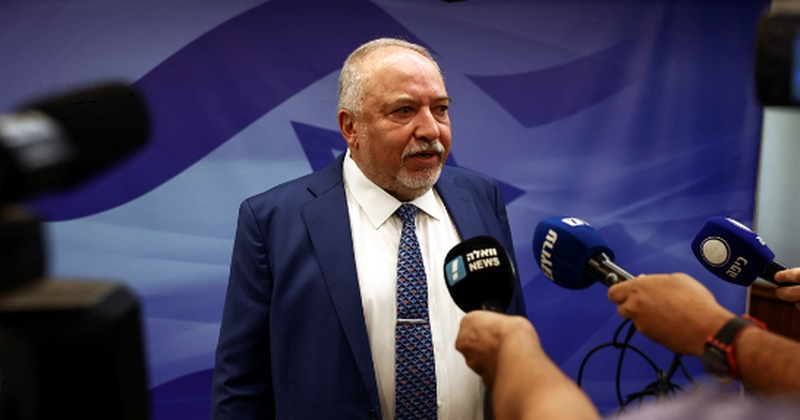
Më shumë reagime kanë ardhur nga Izraeli lidhur me fjalimin e kryeministrit Benjamin Netanyahut në Asamblenë e Përgjithshme të OKB-së.
Sipas mediave të huaja, ish-zëvendëskryeministri dhe anëtari i Knesetit izraelit, Avigdor Lieberman, tha se fjalimi i Netanyahut ishte "një fjalim nga një udhëheqës partie, jo nga kryeministri i të gjithëve".
Ai tregon një fjali të rëndësishme "ndërprerja e luftës në këmbim të lirimit të të gjithë pengjeve" e cila "për fat të keq nuk u tha" nga Netanyahu.
Siç kemi raportuar, shumë njerëz në Izrael kanë qenë kritikë ndaj qasjes së Benjamin Netanyahut ndaj luftës në Gaza.
Familjet e pengjeve izraelite që mbahen ende nga Hamasi thonë se ai është "pengesa e vetme" që pengon kthimin e tyre dhe arritjen e një marrëveshjeje paqeje.
3 Komente
Lini një Përgjigje









Më të lexuarat
24 oret e fundit
Javen e fundit


Blog Tema












In the Palestinian territories. The ideology of Hamas has a strong anti-Jewish stance, manifesting in the use of tropes from The Protocols of the Elders of Zion, the use of derogatory descriptions of Jews and equating Israel to Nazi Germany. [According to academic Esther Webman] Hate speech. See also: Racism in the Palestinian territories. Antisemitism is not the main tenet of Hamas ideology, although antisemitic rhetoric is frequent and intense in Hamas leaflets. The leaflets generally do not differentiate between Jews and Zionists. In other Hamas publications and interviews with its leaders, attempts at this differentiation have been made. In 2009 representatives of the small anti-Zionist Jewish group Neturei Karta met with Hamas leader Ismail Haniyeh in Gaza, who stated that he held nothing against Jews but only against the State of Israel. Hamas has made conflicting statements about its readiness to recognize Israel. In 2006 a spokesman signaled readiness to recognize Israel within the 1967 borders. Speaking of requests for Hamas to recognize agreements between the Palestinian Authority and Israel, senior Hamas member Khaled Suleiman said that "these agreements are a reality which we view as such, and therefore i see no problem." Also in 2006, a Hamas official ruled out recognition of Israel with reference to West and East Germany, which never recognized each other. The 2017 Hamas charter adopted more moderate tones: it stated that there was a nationalist conflict "with the Zionist project not with the Jews because of their religion" and described the two-state solution, the creation of an independent Palestinian state according to the 1967 borders with Jerusalem as its capital, as a "formula of national consensus", though without giving up the claim to the whole of Palestine, "from the river to the sea", and without compromising Hamas' rejection of the "Zionist entity." Hamas said any change in its position on these matters would require a legitimate future referendum involving all Palestinians living in the West Bank, Gaza and East Jerusalem as well as those living in the Diaspora. Statements by Hamas members and clerics : Statements to an Arab audience In 2008, Hamas imam Yousif al-Zahar said in his sermon at the Katib Wilayat mosque in Gaza that....."Jews are a people who cannot be trusted." They have been traitors to all agreements. Go back to history. Their fate is their vanishing. Another Hamas legislator and imam, Sheik Yunus al-Astal, discussed a Quranic verse suggesting that "suffering by fire is the Jews' destiny in this world and the next." He concluded "Therefore we are sure that the Holocaust is still to come upon the Jews." Following the rededication of the Hurva Synagogue in Jerusalem in March 2010, senior Hamas figure al-Zahar called on Palestinians everywhere to observe five minutes of silence "for Israel's disappearance and to identify with Jerusalem and the al-Aqsa mosque". He further stated that "Wherever you have been you've been sent to your destruction. You've killed and murdered your prophets and you have always dealt in loan-sharking and destruction. You've made a deal with the devil and with destruction itself—just like your synagogue." On August 10, 2012, Ahmad Bahr, Deputy Speaker of the Hamas Parliament, stated in a sermon that aired on Al-Aqsa TV: If the enemy sets foot on a single square inch of Islamic land, Jihad becomes an individual duty, incumbent on every Muslim, male or female. A woman may set out [on Jihad] without her husband's permission, and a servant without his master's permission. Why? In order to annihilate those Jews. ... O Allah, destroy the Jews and their supporters. O Allah, destroy the Americans and their supporters. O Allah, count them one by one, and kill them all, without leaving a single one. In an interview with Al-Aqsa TV on September 12, 2012, Marwan Abu Ras, a Hamas MP, who is also a member of the International Union of Muslim Scholars, stated (as translated by MEMRI): The Jews are behind each and every catastrophe on the face of the Earth. This is not open to debate. This is not a temporal thing, but goes back to days of yore. They concocted so many conspiracies and betrayed rulers and nations so many times that the people harbor hatred towards them. ... Throughout history—from Nebuchadnezzar until modern times. ... They slayed the prophets, and so on. ... Any catastrophe on the face of this Earth—the Jews must be behind it. On December 26, 2012, Senior Hamas official and Jerusalem bureau chief Ahmed Abu Haliba, called on "all Palestinian factions to resume suicide attacks ... deep inside the Zionist enemy" and said that "we must renew the resistance to occupation in any possible way, above all through armed resistance." Abu Haliba suggested the use of suicide bombings as a response to Israel's plans to build housing units in East Jerusalem and the West Bank. In 2014 Hamas spokesman Osama Hamdan defended a video of his repeating the blood libel myth in an interview. Statements to an international audience - Learn more - This section needs to be updated. (August 2024) Longtime leader, Khaled Meshaal.[when?] In an interview with CBS - This Morning on July 27, 2014, then Hamas leader Khaled Meshaal stated: We are not fanatics. We are not fundamentalists. We are not actually fighting the Jews because they are Jews. We do not fight any other races. We fight the occupiers. On January 8, 2012, during a visit to Tunis, Gazan Hamas prime minister Ismail Haniyeh told the Associated Press that he disagrees with the anti-Semitic slogans. "We are not against the Jews because they are Jews. Our problem is with those occupying the land of Palestine," he said. "There are Jews all over the world, but Hamas does not target them." In response to a statement by Palestinian Authority leader Mahmoud Abbas that Hamas preferred non-violent means and had agreed to adopt "peaceful resistance," Hamas contradicted Abbas. According to Hamas spokesman Sami Abu-Zuhri, "We had agreed to give popular resistance precedence in the West Bank, but this does not come at the expense of armed resistance." In May 2009, senior Hamas MP Sayed Abu Musameh said, "in our culture, we respect every foreigner, especially Jews and Christians, but we are against Zionists, not as nationalists but as fascists and racists." In the same interview, he also said, "I hate all kinds of weapons. I dream of seeing every weapon from the atomic bomb to small guns banned everywhere." In January 2009, Gazan Hamas Health Minister Basim Naim published a letter in The Guardian, stating that Hamas has no quarrel with Jewish people, only with the actions of Israel. In October 1994, in a response to Israel's crackdown on Hamas militants following a suicide bombing on a Tel Aviv bus, Hamas promised retaliation: "Rabin must know that Hamas loves death more than Rabin and his soldiers love life." In an interview on Lebanese television on July 28, 2014, Hamas spokesman Osama Hamdan repeated the blood libel myth: We all remember how the Jews used to slaughter Christians, in order to mix their blood in their holy matzos... It happened everywhere. Statements on the Holocaust : Hamas has been explicit in its Holocaust denial. In reaction to the Stockholm conference on the Jewish Holocaust, held in late January 2000, Hamas issued a press release that it published on its official website, containing the following statements from a senior leader: This conference bears a clear Zionist goal, aimed at forging history by hiding the truth about the so-called Holocaust, which is an alleged and invented story with no basis. (...) The invention of these grand illusions of an alleged crime that never occurred, ignoring the millions of dead European victims of Nazism during the war, clearly reveals the racist Zionist face, which believes in the superiority of the Jewish race over the rest of the nations. (...) By these methods, the Jews in the world flout scientific methods of research whenever that research contradicts their racist interests. In August 2003, senior Hamas official Abd Al-Aziz Al-Rantisi wrote in the Hamas newspaper Al-Risala that the Zionists encouraged murder of Jews by the Nazis with the aim of forcing them to immigrate to Palestine. In 2005, Khaled Mashal called Mahmoud Ahmadinejad's December 14, 2005, statements on the Holocaust that Europeans had "created a myth in the name of Holocaust...]) as "courageous". Later in 2008, Basim Naim, the minister of health in the Hamas-led Palestinian Authority government in Gaza countered holocaust denial, and said "it should be made clear that neither Hamas nor the Palestinian government in Gaza denies the Nazi Holocaust. The Holocaust was not only a crime against humanity but one of the most abhorrent crimes in modern history. We condemn it as we condemn every abuse of humanity and all forms of discrimination on the basis of religion, race, gender or nationality." In an open letter to Gaza Strip UN Relief and Works Agency (UNRWA) chief John Ging published August 20, 2009, the movement's Popular Committees for Refugees called the Holocaust "a lie invented by the Zionists," adding that the group refused to let Gazan children study it. Hamas leader Yunis al-Astal continued by saying that having the Holocaust included in the UNRWA curriculum for Gaza students amounted to "marketing a lie and spreading it". Al-Astal continued "I do not exaggerate when i say this issue is a war crime, because of how it serves the Zionist colonizers and deals with their hypocrisy and lies." In February 2011, Hamas voiced opposition to UNRWA's teaching of the Holocaust in Gaza. According to Hamas, "Holocaust studies in refugee camps is a contemptible plot and serves the Zionist entity with a goal of creating a reality and telling stories in order to justify acts of slaughter against the Palestinian people." In July 2012, Fawzi Barhoum, a Hamas spokesman, denounced a visit by Ziad al-Bandak, an adviser to Palestinian Authority President Mahmoud Abbas, to the Auschwitz death camp, saying it was "unjustified" and "unhelpful" and only served the "Zionist occupation" while coming "at the expense of a real Palestinian tragedy". He also called the Holocaust an "alleged tragedy" and "exaggerated". In October 2012, Hamas said that they were opposed to teaching about the Holocaust in Gaza Strip schools run by UNRWA. The Refugee Affairs Department of Hamas said that teaching the Holocaust was a "crime against the issue of the refugees that is aimed at canceling their right of return". Genocide allegations - Persen D. Orme
Braktisja e salles se OKB kur po fliste kryeministri i Izraelit flet vete per pa pranueshmerin e botes per kete njeri qe akuzohet per genocid. Nuk e di si perfaqesuesit e Shqiperise vepruan?
Controversies The extreme and controversial stance of the Neturei Karta towards Israel and Zionism, coupled with its highly visible haredi appearance, often makes it stand out for different reasons in the eyes of different parties. Pro-Palestine activists often hail it as an exemplar of anti-Zionist expressions of Judaism, while pro-Israel or Zionist Jews are far more contemptuous of it (Klaushofer 2002). Neturei Karta followers have often been subjected to harassment and even violence by Zionist supporters, while asserting that their beliefs are non-violent. In some instances, however, the line between the movement’s non-violent beliefs and its actions has been blurry. Between the 1930s and 1970s, for example, the Neturei Karta embarked on a series of modesty campaigns under the leadership of Rabbi Amram Blau (1894-1974), who was also one of the movement’s founders. The first phase of the campaigns, in the 1930s and 1940s, was confined within haredi neighbourhoods in Jerusalem and focused mostly on women’s dress. During this phase, Blau established modesty patrols under the auspices of the Edah Haredit to enforce dress codes – often coercively – upon haredi women (Inbari 2012: 110). After the establishment of the state of Israel, these modesty campaigns moved beyond the confines of haredi neighbourhoods, especially in the 1950s and 1960s. This next phase of the campaigns targeted mixed-gender sporting and cultural activities in non-religious parts of Jerusalem. These protests began as small vigils but grew significantly after the police intervened and assaulted and arrested demonstrators (Inbari 2012: 111). In one protest against a youth club run by a working mothers’ organisation, demonstrations were held daily for nearly a year. Approximately 170 demonstrators were arrested in total – Blau was detained for 21 days for participating in an unlawful gathering. Even then, he rejected a compromise from the state to build a wall which would separate the club from Mea She’arim, one of the oldest haredi neighbourhoods in Jerusalem’s old yishuv (Inbari 2012: 119). During these decades, the Neturei Karta’s protest activities were sustained substantially through donations from its supporters in the Diaspora (Inbari 2012: 120). More controversially in connection with these modesty campaigns, two young haredi men torched Eros, a sex shop in Jerusalem, in 1972. They were arrested by the police – one of them was sentenced to one year in prison, the other to 18 months. Their use of violence caused an outcry in haredi circles – however, their actions were justified by Blau, based upon a passage in the book of Numbers 25 (Inbari 2012: 121). In this passage, Pinchas (also spelled Phineas or Phinehas)—the grandson of Aaron the priest— becomes enraged and kills two people whom he observes having illicit sexual relations. Even though Pinchas acts unilaterally and violates the commandment not to commit murder, he escapes divine punishment. Based on this passage, Blau contended that he would never order his followers to commit murder but, like Pinchas, the two men acted violently out of their deep love and respect for the Torah. According to Blau, their faithfulness to the Torah outweighed the severity of their offence (Inbari 2012: 123). In the 1960s, however, Blau was also the subject of a moral controversy when he became secretly engaged to a French convert to Judaism, Ruth Ben-David. Their marriage provoked a scandal among haredim because it explicitly defied a ruling from the Badatz – the Edah Haredit’s court – forbidding the union. The ruling was sought by Blau’s own sons who objected to the marriage of their father, who was 70, to Ben-David, 44, less than twelve months after their mother’s death. Even the Satmar Hasidim intervened, offering Ben-David 25,000 Israeli Pounds if she would reject Blau’s marriage proposal. In the aftermath of the wedding in 1965, Blau’s sons shunned him – one of them, Uri, eventually became appointed leader of the Neturei Karta. Under Uri Blau’s leadership, the Neturei Karta also severed its ties with the Edah Haredit and further internal factionalism ensued (Ettinger 2010). The Neturei Karta’s subsequent public activities and positions thus also need to be contextualised within this history of internal friction. Most notably, the endorsement of the PLO in the 1980s came from the more group’s more radical wing, led by Moshe Hirsch (Friedland and Hecht 1996: 64). In the 1990s, Hirsch was attacked by a man who threw acid on him as he was leaving a synagogue in Jerusalem. Hirsch lost his left eye and had to wear a prosthetic glass eye, but the attack did not alter his political convictions (Baram 2010). The US branch’s overtures towards Louis Farrakhan and the Nation of Islam in the late 1990s was also led by supporters of this more radical faction (Noel 1999). According to some estimates, there are only around a hundred Neturei Karta followers who are active in this wing. The majority of the movement’s followers, numbering in the few thousands worldwide, simply withdraw from Israeli state institutions and non-haredi Jews without getting involved in public protests (Levy 2012). In recent years, this radical faction of the Neturei Karta has been embroiled in widespread protests by many haredim against compulsory conscription into the Israeli Defence Forces (IDF). Upon the establishment of the state of Israel, yeshiva students were granted exemptions from army conscription, partly because they formed a small minority of the population that was eligible for military service anyway (Heller 2017). In the following decades, however, the haredi population has grown exponentially and there have been growing calls for compulsory conscription to apply to them. In line with these developments, the IDF has accommodated the religious needs of voluntary recruits from haredi backgrounds. In September 2017, the Israeli High Court struck down the exemption for yeshiva students from compulsory military service as unconstitutional (Rabinowitz and Lis 2017). The court ruling was delivered in response to an earlier amendment by the Knesset in 2015 to the Equal Service Law that allowed eligible haredim to defer their conscription until 2023. The amendment exacerbated anti-haredi sentiments among non-religious Israeli Jews while also fuelling fierce anti-IDF protests by many haredim, in which the Neturei Karta has been particularly vocal. In September 2016, a group of twenty Neturei Karta followers broke into the house of a pro-IDF Lubavitcher rabbi in Jerusalem and condemned him and his wife for their stance (Times of Israel Staff 2016). These tensions do not appear to be abating, with President Benjamin Netanyahu’s government still attempting to grant concessions to anti-conscription haredim with proposed new legislation (Harkov and Sharon 2017). Against this background, the Neturei Karta – while often dismissed as a radical fringe sect – provides a glimpse into the different layers of intra-Jewish conflict within Israel and in the Diaspora. ....Š.p..e...r....i.....s......e.......ë........e.........n..........d.........æQÆ