

Te fundit
Samiti i Gjenevës/ Bushati kërkon mbështetje për anëtarësim në Këshillin për të Drejtat e Njeriut

4 Mars 2014, 14:00Politika
TEMA
“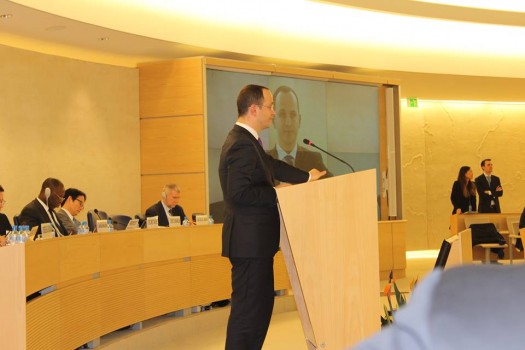 Kandidatura e Shqipërisë për anëtarësim në Këshillin e të Drejtave të Njeriut për periudhën 2015-2017 është vetëm një pasojë logjike e rrugës sonë drejt ndërtimit të një shoqërie të bazuar në të drejtat e njeriut”, u shpreh ministri i Jashtëm Ditmir Bushati, gjatë fjalës në punimet e Segmentit të Nivelit të Lartë të Sesionit të 25-të të Këshillit të të Drejtave të Njeriut, sesion i cili zhvillohet në Gjenevë.
Bushati kërkoi mbështetjen e kandidaturës së Shqipërisë për anëtarësim në Këshillin e të Drejtave të Njeriut për periudhën 2015-2017. Ai shprehu bindjen se “kemi mbledhur përvojë të vlefshme gjatë viteve. Dhe, duke pohuar sërish universalitetin, pandashmërinë dhe ndërvarësinë e të gjitha të drejtave të njeriut, ne mund të sjellim një perspektivë kombëtare dhe rajonale në diskutimet e Këshillit dhe mbrojtjen e të drejtave të njeriut në mbarë botën”.
Ndërsa aplikojmë për anëtarësim në Këshillin e të Drejtave të Njeriut për periudhën 2015-2017, Bushati nënvizoi se ne jemi të vetëdijshëm se kjo nuk është shpërblim, por një përgjegjësi më e madh, një sfidë më e madhe që do të shërbejë si një nxitje për demokratizimin e mëtejshëm të vendit tonë.
”Për këtë arsye, qeveria shqiptare mirëpret dhe do të vlerësojmë shumë mbështetjen e çmuar të shteteve anëtare për kandidaturën e Shqipërisë në Këshillin e të Drejtave të Njeriut”, tha Bushati.
Duke bërë një parantezë të zhvillimeve historike të Shqipërisë Bushati tha se “për gati gjysmë shekulli, Shqipëria ishte shteti më i izoluar dhe më i shtypur në Europën Lindore. Gjatë kësaj periudhe të errët, feja, prona private dhe lëvizja e lirë u ndaluan. Shqipëtarëve ju mohoheshin the drejtat themelore të njeriut. Ëndrrat e disa brezave u prishën. Vendi u shkëput në kuptimin e mirëfilltë nga bota”.
Në dy dekadat e fundit, tha ministri, Shqipëria është kthyer nga një regjim totalitar në një demokraci funksionale and një ekonomi e orientuar nga tregu. Përparimi është i dukshëm, mbi të gjitha, në fushën e të drejtave të njeriut. Mbrojtja dhe promovimi i të drejtave të njeriut është bërë përgjatë viteve jo vetëm një prioritet kombëtar, por edhe pjesë e politikës së jashtme të Shqipërisë.Ai deklaroi se “duke forcuar mëtej një bashkëjetë të gjatë, të qëndrueshme dhe harmonike midis feve të ndryshme, Shqipëria ofron një model të vlefshëm të respektimit të diversitetit, tolerancës dhe bashkëjetesës për rajonin dhe më gjerë. Për ne, toleranca dhe mikpritjen janë vlera të qenësishme qe burojnë nga tradita jonë.
“Nuk është për t’u çuditur që gjatë Luftës së Dytë Botërore, Shqipëria mirëpriti dhe mbrojti hebrenjtë që ikën nga Holokausti, megjithëse ishte vetë nën pushtimin nazist. Nuk është për t’u çuditur që gjatë luftës në Kosovë, shqiptarët mirëpritën dhe strehuan vëllezërit e tyre, megjithëse vetëm dy vite më parë vendi ishte në prag të një kolapsi total financiar”, tha Bushati.
“Lufta për drejtat e njeriut nuk mund të arrihet pa rolin dhe kontribution e paçmuar të shoqërisë civile për të ecur përpara me të drejtat e njeriut në të gjitha aspektet, përfshirë të drejtat e gruas dhe të vajzave, për të siguruar pjesëmarrjen e tyre të plotë dhe të barabartë në jetën politike dhe publike. E dimë se është arritur shumë, por ne jemi të vetëdijshëm se mund të bëhet akoma më shumë”, tha Bushati.
Këshilli i të Drejtave të Njeriut është organi më i rëndësishëm i sistemit të OKB-së, i cili ka si mision të tij promovimin dhe respektimin e të drejtave të njeriut në të gjithë botën
4 komente në “Samiti i Gjenevës/ Bushati kërkon mbështetje për anëtarësim në Këshillin për të Drejtat e Njeriut”
Lini një Përgjigje
Lini një Përgjigje


Më të lexuarat
24 oret e fundit
Javen e fundit


Blog Tema






T’ja pasni fut kot..se ministir juaj asnje fjalë se ka folur për sqhipërinë pos dy-tre rreshtash…:-)) Ai eshte përqdnruar kyresiht nnmë Kore, Siri dhe Ukrainë…
Mr. President,
Madam High Commissioner,
Excellencies,
Ladies and Gentlemen,
I am honored to address the High Level Segment of the 25th Session of the Human Rights Council.
History haunts us every time that we gather here, as a community of nations. This is the milieu where our political differences should diminish in the light of the human rights and humanitarian issues. This is where we should strive to focus on our common values as humanity – a humanity with a humanitarian conscience.
History also teaches us that no society and no nation have progressed or prospered without ensuring respect for and protection of human rights. As Kofi Anan has rightly pointed out, “we will not enjoy security without development, we will not enjoy development without security, and we will not enjoy either without respect for human rights.”
As we speak, the continued, systematic gross violations of human rights in Syria show once more what can happen when the international community remains indecisive.
Sadly, Syria is not the only situation worrying us today. In Ukraine, protesters poured into the streets and occupied squares, demanding change in the country. We would like to reiterate once again the importance of an inclusive political process based on democratic values, respect for human rights, minorities and the rule of law, which fulfills the democratic aspirations of the entire Ukrainian people. We strongly believe that human rights violations perpetrated in Ukraine should be investigated, and that those responsible should be held accountable.
We welcome the recent report of the Commission of Inquiry on human rights in the Democratic People’s Republic of Korea. We join the call for a full investigation by an international tribunal, of the human rights violations carried out in North Korea. There should be no impunity for those who perpetrate violations of human rights.
Mr. President,
The Human Rights Council and the Office of the High Commissioner for Human Rights are cornerstones of the international system for the protection of human rights.
We envisage the Council as a living instrument through which human rights are promoted and protected. Yet, in a fast changing world, the Council should adapt to new realities and challenges. This also means more active engagement in supporting the Council, because the protection and promotion of human rights is a responsibility of us all, not only of the Council.
The Human Rights Council deserves our praise and support regarding the successful completion of the first cycle of the Universal Periodic Review. As the second is underway, there is a lot more to be done and achieved with a view to ensuring full respect for human rights worldwide.
The outcome of the intergovernmental process on treaty body strengthening, recently concluded in New York, confirms the strong global consensus on the need to ensure the continued relevance and vitality of the human rights treaty bodies. We hope that the final outcome will strengthen in practice the human rights protection that the treaty body system offers, while maintaining the independence of the treaty bodies and of their members.
Ladies and gentlemen,
For almost half a century, Albania was Eastern Europe’s most isolated and repressive state. During those dark ages, religion, private property and free movement were banned. Albanians were denied their basic human rights. Entire generations had their dreams shattered. The country was literally cut off from the world.
In the last two decades, Albania has transformed itself from a totalitarian regime to a functioning democracy and a market oriented economy. The progress is evident, above all, in the field of human rights. The protection and promotion of human rights has become, over the years, both a national priority and part of Albania’s foreign policy.
In further strengthening a long-time, well-established, harmonious coexistence between different religions, Albania offers a valuable model of respect for diversity, tolerance and coexistence for the region and beyond. To us, tolerance and hospitability are inherent values that spring from our tradition. It is not a surprise that during World War II, Albania welcomed and protected the Jews that fled the Holocaust, despite being itself under Nazi occupation. It is not a surprise that during the Kosovo war, Albanians welcomed and sheltered their brethren, despite the fact that only two years earlier the country was on the brink of total financial collapse.
Ladies and gentlemen,
The struggle for human rights cannot be achieved without the invaluable role and contribution of civil society in advancing human rights in all aspects, including the rights of women and girls, to ensure their full and equal participation in political and public life. We know much has been achieved, but we are equally aware that more can be done.
This is why in December 2009, Albania extended a standing invitation to all special procedures, convinced that their expertise, professionalism and independence can only add to national action and contribute to the implementation of national commitments and international obligations.
Albania pledges to continue working with special procedure mandate holders in implementing their recommendations, and to further discuss and disseminate the recommendations among relevant authorities, civil society and the general public.
We attach great importance to the independence of the Office of the High Commissioner for Human Rights (OHCHR) and its role in promoting and protecting human rights throughout the world. We will consider increasing our contribution to this Office.
Albania has submitted its second national report and will duly cooperate with the Council during the second cycle of the Universal Periodic Review (UPR). We will continue to support the UPR process and will ensure an effective follow-up to the UPR recommendations.
Ladies and gentlemen,
Albania’s candidacy for membership of the Human Rights Council for the period 2015-2017 is only a logical consequence of our road towards building a society based on human rights.
We are convinced to have gathered valuable experience over the years. And by reaffirming the universality, indivisibility, and interdependence of all human rights, we can bring a national and regional perspective in the Council’s deliberations and advocacy of human rights worldwide.
While we apply for membership to the Human Rights Council for the period 2015-2017, we are aware that this is not a reward – it is a greater responsibility, a greater challenge that would serve as an impetus to further the democratization of our country.
Therefore, the Albanian government looks forward and would highly appreciate the valuable support of Member States for Albania’s candidacy to the Human Rights Council.
Thank you.
C’ja fut kot mere Presheve. Te gjitha ato qe permenden ne artikull ishin pjese e fjales se tij.
Mos numuro rreshtat por nxir kuptimin qe kane ato rreshta.
TUNG!
Me vjen keq por me duket se ai qe ja ke fut kot ne kete mes je ti vete. Nese Presheva solli tekstin e plote ne gjuhen origjinale, kjo nuk do te thote qe dikush te shqetesohet thjeshte per kete shkak.
Sa per “zberthimin” e tekstit, ate sejcili e inerpreton sipas kaplloqes se tij. Ai ashtu e kuptoi, prandaj dhe i shkoi mendja per t’a sjelle te plote ne menyre qe t’a lexonin edhe te tjeret.
Jam i sigurte, se ti nuk e ke bere leximin e plote te tekstit, prandaj dhe kerkon te te nxjerrin kuptimin te tjeret.
Pa tjeter qe mund te behet edhe me shume… pshm. mund te behej me shume ne respektimin e te drejtave te familjareve te viktimave te ngjarjeve te Gerdecit dhe 21 janarit duke ndeshkuar nje per nje fajtoret, dhe jo duke u mjaftuar vetem me nja dy vizita ne famile, me nja dy dhurata, lodra apo mesazhe ngushellimi. Mos valle bota eshte e verber?