

Te fundit
Katër vjet pas Gedafit, a është Libia një vend i më mirë?

20 Tetor 2015, 19:55Politika
TEMA
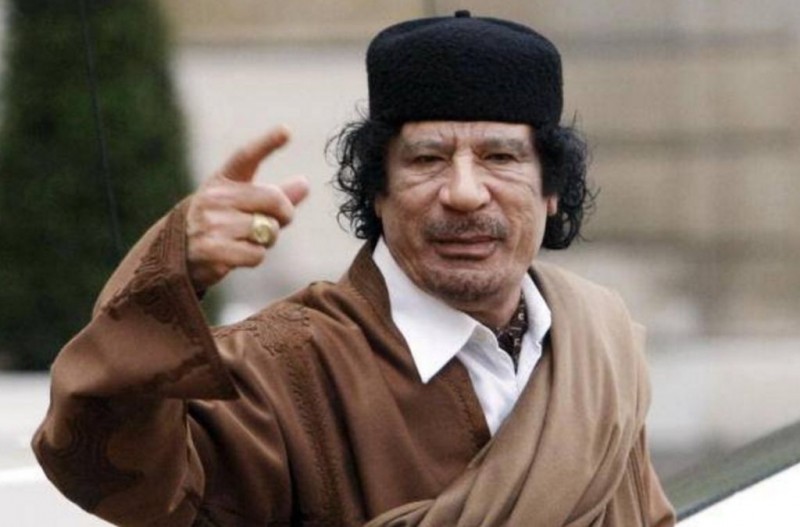 Nga Mustafa Fetouri
Një ish-udhëheqës rebel, që nuk dëshiron të identifikohet nga frika e hakmarrjes, pohon se vdekja e Gedafit nuk është dashur domosdoshmërisht nga populli libian, por nga politikanët e huaj, për shkak se ai dinte shumë. Sipas tij, nëse Gedafi vendoste të fliste në gjyqin që do të zhvillohej ndaj tij, mund të vinte në pozita delikate shumë liderë rajonalë dhe botërorë
Njëzet tetori i vitit 2011, do të shënonte fundin e udhëheqësit libian Muamar Gedafi, që gjeti vdekjen në rrethana ende misterioze, teksa karvani me automjete ishte duke u larguar nga qytetin i tij të lindjes Sirte, në Libinë qëndrore, teksa ndërsa rebelët e mbështetur nga NATO e rrethuan.
Nuk ka asnjë dëshmi të besueshme se si apo pse vdiq, por Human Rights Watch, beson se karvani i tij u bombardua fillimisht nga një avion i NATO-s, duke e detyruar liderin libian dhe rreth 250 ndjekësit e tij më besnikë të kërkonin strehim. Më pas një video amatore tregon një Gedafi të plagosur, ndërsa ishte duke u ngarkuar në një kamion kamionçinë nga turma e rebelëve për t’u çuar në Misrata rreth 250 kilometra në veriperëndim të Sirtes, në një kohë që pak orë më vonë ai u shpall i vdekur.
Prej atëhere, Libia gjendet e zhytur në një spitale të rrezikshme dhune, në pikën e moskthimit prapa, teksa militantët islamikë terrorizojnë civilët, ndërsa dy qeveri rivale luftojnë njëra-tjetrën. Autoritetet libiane nuk hetuan plotësisht mbi atë ngjarje, pavarësisht premtimeve për ta bërë këtë, ndërsa nuk ka asnjë deklaratë zyrtare rreth asaj që ndodhi në të vërtetë.
Rebeli që pretendoi se kishte kapur të gjallë Gedafin, Omran Bin Shaban, vdiq në rrethana të paqarta, ndërsa ishte duke u mjekuar në Francë në vitin 2012. Vdekja e Gedafit do të hyjë si një pikë referimi, sigurisht në aspektin negativ. Ajo vështirë se përfaqëson ndonjë prej idealeve, për të cilat aspiroi një komb i tërë, që sapo kishte dalë nga dhuna dhe lufta revolucionare, dhe që mendohej se do të kthente, në mes shpresave të tjera, drejtësinë dhe sundimin e ligjit.
E gjitha kjo të shpie drejt një pyetje të thjeshtë:A është më mirë Libia pa Gedafin? Shumica e libianëve do të donin ta shihnin atë përpara gjykatës, për t’iu përgjigjur shumë pyetjeve që vetëm ai mund t’u jepte përgjigje. Tek e fundit, Gedafi sundoi për më shumë se 4 dekada. Por sot edhe më shumë libianë, duke përfshirë edhe ish-udhëheqës të kryengritësve, mendojnë se ai u vra për të njëjtat arsye që duhet të ishte gjykuar:prandaj atij nuk do t’i jepej mundësia për të folur.
Hasan, një ish-udhëheqës rebel që nuk dëshiron të përdorë emrin e tij të vërtetë nga frika e hakmarrjes, tha për “Al-Monitor” se “vdekja e Gadafit me siguri nuk është ajo që kemi dashur, por unë besoj se politikanët vendas dhe të huaj e donin atë të vdekur, për shkak se ai dinte shumë”. Duke folur, ai mund të vinte në pozita delikate shumë liderë rajonalë dhe botërore.
Kur u pyet në lidhje me situatën në vendin e tij sot, Hasan tha:”Nuk është aspak premtuese, dhe shumë prej nesh (ish-rebelët) ndjejnë keqardhje për atë që ka ndodhur, sepse ne nuk pritëm kurrësesi që të ishte kaq keq”. Pa dyshim, Libia sot është një vend i copëtuar dhe pa asnjë qeveri qëndrore.
Në vend të kësaj, ajo ka dy qeveri që janë në konflikt me njëra-tjetrën – njëra në Tripoli që nuk njihet nga asnjë shtet tjetër, dhe tjetra në qytetin e El-Bajadas, e cila gëzon njohje ndërkombëtare, diçka kjo e padobishme gjykuar nga rrethanat aktuale. Në të njëjtën kohë, grupime të ndryshme terroriste janë duke e zgjeruar ndikimin e tyre në Libi. Më i rrezikshmi është Shteti Islamik, që deri më tani ka pushtuar 3 qytete:Derna në lindje, Sirte në qendër dhe Subrata në perëndim.
Pra, shumë libianë ndajnë besime të tilla në ditët e sotme, pasi ata e krahasojnë vendin e tyre dhe në fakt jetën e tyre aktuale, me atë të kaluar nën sundimin Gedafit. Dy javë më parë, ISIS-i ndërmori sulmin e tij më të guximshëm në Libi, ndaj një kompleksi burgjesh në bazën ajrore të Mitigas, një vend i sigurtë në Tripoli.
Në të njëjtën kohë, milicitë e ndryshme veprojnë ende jashtë çdo kontrolli qeveritar, me gjyqësorin që mezi mbahet në këmbë. Arrestimet arbitrare, rrëmbimet dhe vrasjet ndodhin ende, megjithëse në një shkallë më të vogël se 3 vjet më parë. Të shtënat sporadike, barrikadat dhe mungesa e energjisë, janë bërë diçka e zakonshme.
Bengazi, qyteti i dytë më i madh në Libi, ku revolucioni filloi në shkurt të vitit 2011, është shkatërruar thuajse plotësisht nga lufta e vazhdueshme, ndërmjet ushtrisë libiane të qeverisë së njohur ndërkombëtarisht me qendër në El Bajada, dhe fraksioneve të ndryshme islamike të përqëndruara kryesisht pranë pjesën veriore të qytetit, pranë bregdetit. Kryeqyteti i Tripolit, ndodhet nën kontrollin e një qeverie, që nuk njihet nga asnjë shtet tjetër. Ajo u krijua pas një lufte të përgjakshme, që përfundoi me shkatërrimin e aeroportit dhe pushtimin e qytetit në gushtin e vitit 2014, gjë që e detyroi qeverinë e njohur ndërkombëtarisht të zhvendosej në Libinë lindore.
Krahasuar me një vit më parë, jeta për libianët e zakonshëm në kryeqytet, mund të jetë përmirësuar disi, por ajo është ende larg normales – normale në krahasim me jetën nën sundimin e Gedafit. Njerëzit nuk kanë ende siguri dhe luftojnë për të mbijetuar, me çmimet që kanë kapur majat për pak atë ushqim bazë që është në dispozicion.
Shërbimet themelore mjekësore janë pothuajse inekzistente, duke i detyruar njerëzit të kërkojnë trajtim në Tunizinë fqinje. Ata që kanë mundësi financiare, dhe që kërkojnë të shkojnë në Evropë për çfarëdolloj arsye, e kanë edhe më të vështirë, pasi të gjitha ambasadat perëndimore kanë kohë që janë mbyllur. Për të aplikuar për vizë, çdo qytetar libian duhet të udhëtojnë drejt Tunizit, kryeqytetit të Tunizisë.
Prodhimi i naftës, burimi kryesor i të ardhurave të qeverisë, është ulur me tre të katërtat, dhe tashmë vendi nxjerr me pak se gjysmë milioni fuçi në ditë, duke e privuar thesarin nga të ardhurat jetike për të paguar mijëra nëpunës civilë në listë-pagesat e saj. Në këto kushte, qeveria detyrohet të vonojë më të paktën 3 muaj shpërndarjen e tyre.
Të gjitha projektet e mëdha infrastrukturore që ishin në proces, kur trazirat filluan 4 vjet më pare, kanë mbetur pezull, pasi kompanitë e huaja janë larguar, duke lënë vinçat gjigandë të mbushin horizontin
në Tripoli. Mijëra libianë ndodhen ende të zhvendosur brendapërbrenda vendit, në një kohë që rreth 1 milionë qytetarë janë detyruar të kërkojnë siguri jashtë vendit – veçanërisht në Egjipt dhe Tunizi.
Shumica e shkollave dhe universiteteve ende nuk kanë hapur dyert për këtë vit akademik, dhe
nxënësit po e kalojnë pjesën më të madhe të kohës në rrugë, duke rrezikuar shpesh edhe jetën, për shkak të pasigurisë që mbretëron. Ndërkohë, fraksionet politike vazhdojnë të grinden mbi formën e qeverisë së ardhshme, në bisedimet e pafundme të kryesuara nga OKB, dhe që përfunduan kohët e fundit në Skhirat të Marokut.
Njerëzit kanë pak shpresë, se vendi i tyre mund të dalë së shpejti nga kjo gjendje. Hasan beson se “bisedime të tilla nuk do të sjellin asgjë për vendin”, duke pranuar se “jeta nën Gedafin ishte shumë
më mirë se sa është tani”.
Shenim: Mustafa Fetouri është gazetar libian. Ai fitoi çmimin e BE ‘Samir Kassir’ për komentin më të mirë në vitin 2010.
“Al-Monitor” – Bota.al
9 komente në “Katër vjet pas Gedafit, a është Libia një vend i më mirë?”
Lini një Përgjigje
Lini një Përgjigje










Më të lexuarat
24 oret e fundit
Javen e fundit


Blog Tema












Nuk ka asnje diskutim se Libia, Iraku dhe Siria u shkaterruan qellimisht dhe teresisht nga Fuqite e Medha. Dhe do te duhen 1000 vjet qe te rimarrin veten. Pyetja qe shtrohet eshte: Perse pikerisht keto vende dhe jo Maroku, Jordania apo Arabia Saudite?!
nga idealistet irrealiste do perfitojne perhere njerezit e satanait.
kushedi sa hasane e hysene idealiste luftojne per isis e cfaredotjeter organizate parimore?
E gezofshi demokracin shyqyr qe shpetuat nga diktatori qe ju mbante me buk, HANI NJE MUT TE MADH TE TER TANI SE SI QENT DO VUANI TER JETEN TUAJ.
http://smallwarsjournal.com/jrnl/art/why-isis-is-winning-in-iraq?utm_source=twitterfeed&utm_medium=twitter
Why ISIS is Winning in Iraq
Johnny Lou and Patrick O’Connor
On May 17th, as the few remaining defenders of Ramadi collapsed and withdrew back to Baghdad in the face of massive attacks by ISIS fighters, officials and observers across Iraq and the United States were asking one question: how? How did the Iraqi defenders of the city, armed and trained by the most powerful military on earth get defeated in a pitched battle against an insurgent terrorist group armed with stolen weapons?
Analysts devised a number of explanations. Many Iraqi officers and political officials blamed a lack of supporting air-strikes from the American-led coalition. Observers in the US blamed the “lack of resolve” amongst the Iraqi defenders, a charge that outraged Iraqi Army officials. Other US officials believed that the defeat was due to an equipment mismatch: the Iraqi defenders lacked the heavy firepower needed to counter the stolen American-made weapons and vehicles ISIS deployed.
The existing explanations almost exclusively focus on tangible assets such as equipment and weapons or the problems within the Iraqi army. What has so far been missing from this discussion is the impressive military skill ISIS has exhibited. This is a level of tactical skill foreign to most terrorist groups, but familiar to any conventional military officer and to Stephen Biddle, who outlined the impact that skill plays in modern warfare.
The Battle of Ramadi
Nowhere was ISIS’s incredibly high level of skill better showcased than the Battle of Ramadi. The Battle of Ramadi began on May 14th with an assault by ISIS forces on the government compound at the center of the city. After four days of fighting in and around the city of Ramadi, the few remaining Iraqi defenders of the city fled from their positions in the face of relentless assaults by ISIS militants. Important buildings in the city were soon adorned with the flags of the victorious Islamic State and people suspected of loyalty to the government were put to death. This was a humiliating defeat for the Iraqi forces and the US military advisors who had trained them, as a vastly outnumbered ISIS force managed to capture Ramadi in less than four days with no more advanced weaponry than waves of suicide bombers in stolen vehicles. This victory was due not to any numerical or armament advantage, but ISIS’s mastery of what Biddle terms the “modern system” of warfare.
Firepower and the Problem of Modern Warfare
The advent of long-range rapid-fire weapons in the modern era fundamentally changed the way soldiers attacked their enemies. As generals (and soldiers) painfully learned in the First World War, massive ranks of infantry charging a defensive position would be torn to pieces by rapid-fire machine guns, long-range artillery, and precision rifle fire. In the face of such formidable firepower, armies throughout the world had to fundamentally alter the way in which they went on the offensive. No longer were the principles of offensives centered on massed ranks of infantry; any such force would be annihilated long before taking their objective. Armies of the modern system would need to be nimble and efficient; leveraging training and skill instead of brute force to achieve victory.
Combined Arms Integration
The key to the modern offensive is the principle of combined arms integration. Infantry, now organized into smaller assault units to take advantage of cover, were still responsible for taking ground. To get them to their targets unmolested, other troops and artillery would fire upon defensive positions, not to destroy them, but to suppress their fire. This principle of combining attacking infantry with supporting fire is the basis of Biddle’s “modern system” and has been the key to modern military offensives from the Western Front to Ramadi.
Although the Islamic State also fields a significant amount of artillery, their weapon of choice on the offensive has been the suicide car (or truck) bomb. In the battle of Ramadi, a number of massive vehicle born suicide bombers were deployed in the attacks on government held positions. The attack on the Ramadi police headquarters on May 15th is a textbook example of ISIS’s offensive methodology: an armored bulldozer packed with explosives destroyed the barriers surrounding the western entrance to the government complex to clear the way for two more suicide truck bombers to destroy the entrance and stun the defenders. Immediately after the bombs went off, ISIS fighters swarmed through the breach, overwhelmed the defenders of the compound and took the position. Similar tactics were deployed in attacks on all of the government positions throughout the Battle of Ramadi, and we observe similar tactics in other cities such as Kobane and Mosul. Although they deploy suicide truck bombers instead of long range artillery, ISIS’s tactics hew closely to Biddle’s modern system: heavy firepower (in the form of suicide bombs) clear the way for a closely coordinated infantry assault via suppression.
Deliberate Moderate Tempo
Though the implementation of the modern system provided a way for offensive forces to overcome the firepower of modern defenders, it required a different sort of offensive pacing. Attacking infantry now needed to wait for slower suppressing units to get in place before their attack could begin. No longer was the speed of an offensive dictated solely by how quickly infantry could be moved from one engagement to the next. The modern system, though effective, demanded a deliberate and moderate tempo to allow for all the requisite elements to get in place.
This sort of deliberate tempo was on display in the May assault on Ramadi. ISIS forces took over four days to take a city just over 5.5 miles across. The modern system necessitated this moderated pace through the city: ISIS commanders knew that infantry assaulting a position had to wait for the requisite suicide car bombs to be set up and launched before they could begin. This led to the pattern we observed in Ramadi of focused attacks to capture select targets before moving onto others.
Timeline of ISIS Attacks in Ramadi
The Need for Skill
These new combined arms offensives dictated by the modern system required a much higher level of training and planning on the part of militaries. Suppressing fire from the rear had to be timed precisely: if they stopped too early, the defenders would regroup and destroy the attacking infantry; too late and fratricide would ensue. This meant that leaders and officers across the chain of command needed to possess an unprecedented level of training and skill in order to carry out these attacks.
ISIS’s skills and mastery of the modern system were on full display at Ramadi, as well as battles across Iraq and Syria. The question remains as to where ISIS managed to find these all-important skills that are lacking in almost all other terrorist organizations. The answer lies in the events of the US invasion of Iraq in 2003 and the subsequent toppling of Saddam’s Baathist party.
The Saddam Connection
In the weeks after the attack on Ramadi, it was discovered that the leaders of the ISIS fighters that had taken the city were former Baathists loyal to Saddam Hussein. In fact, fully four out of seven of the members of the Shura council, including Abu Muslim al Afari al Turkmani, the second in command of ISIS, are former Baathist military commanders. Former Baathist military members also serve as fighters and lower level commanders of ISIS forces.
These Saddam loyalists can be traced back to after the fall of Saddam’s regime, when the Baathists that made up the core of his government and followers were swiftly removed from power. Following the collapse of Saddam’s regime, official US government policy under Ambassador Bremer called for the “de-Baathification” of Iraq. All individuals affiliated with the Baath party were purged from government positions, the military, and schools. It’s been estimated that over 500,000 Baathists in Iraq’s military and intelligence services alone were dismissed and stripped of their pay and pensions[i]. Many of these former soldiers then joined Al Qaeda in Iraq and fought coalition forces non-stop during the insurgency period.
These de-Baathification programs were continued even after the end of the interim government. In a decision sanctioned by the US government, all members or affiliates of the Baath party were subsequently banned by Prime Minister al Maliki from running in the Parliamentary elections in 2005 and 2010. Dismissal of civil servants, including doctors, teachers, and engineers, over charges of being affiliated with the Baathist party continued well after the initial purges.
The Road to ISIS
When AQI gradually evolved into ISIS, many of these Baathists joined the new organization. Former Saddam army officers and soldiers, barred from service in the new Iraqi army, began to fight for the Islamic State. This infusion of military leaders and personnel was the key to ISIS’s acquisition of skill necessary for the combined assaults observed in Ramadi and elsewhere.
The rise of ISIS and its military successes are a direct result of the de-Baathification policies of the US interim government and the new Iraqi government. The continued alienation of former Baath party members, whom number in the hundreds of thousands and include Iraq’s most capable civil servants and military leaders, cannot continue if ISIS is to be effectively combated. The expertise and experience that they lend to ISIS is the key to their ability to use advanced military tactics like the ones we have seen in Ramadi and other major battles and these tactics have given them an unprecedented amount of campaign success.
A Baathist Awakening
Though the Baathists and the Islamic State are currently working together, their relationship is more a marriage of convenience rooted in the exclusion of the Baathists from the new Iraqi government and military. ISIS continues to be viewed as extremely radical, even in the Arab world, and it is easy to see how their plans for a global Islamic Caliphate clashes with the views of the nationalist and relatively secular Baathists. The surest way for the Iraqi government to strike at the fighting capability of ISIS is to cultivate relations with the former Baathists and bring them back into the fold of normal Iraqi life, including its political processes. Not only would this deprive ISIS of capable leaders and battle commanders, but it would allow us to use the Baathists to bolster the fighting capabilities of the Iraqi armed forces, which can only be for the better given their recent performances.
Nor is this kind of reconciliation without precedent. During the Sri Lankan civil war, the Sri Lankan government reached out to Col. Karuna, commander of the LTTE in the eastern provinces, who then defected with a third of the LTTE’s fighting forces. Not only did Karuna abandon the Tigers, but his men actually joined the Sri Lankan army in fighting the remaining insurgents. This proved to be the key to taking down the Tamil Tigers, who collapsed five years later. Coalition forces followed a similar strategy with the Anbar Awakening, in which Sunni tribesmen were recruited to help eventually defeat AQI. Now that AQI’s remnants have evolved into ISIS, we need a Baathist Awakening to turn the tide.
Po shqiptaret si duhet te sillen me Edi Ramen??
Kjo pyetje na vjen nder mend dite e nate.
Shikoni se cfare bejne dashnoret e Shqipes se plagosur
Ku je o Shqipe, O goce tere nur
Me shume keqardhje vllazen e motra shqipetare ju njoftoje se Shteti iSlamikE ka rrezue avionin e pare rus. Shihet dhe ndihet gezimi I leshakeve kur goditet avioni:
https://www.youtube.com/watch?v=xN76HA-oIqo
Aloha Snackbar !!
4 vjet pas Gedafit, a eshte Libia vendi me rezuervaret e boshatisura te naftes?
Libia, Iraku, dhe Siria, u shkaterruan qelimisht qe te mos lejonin te binte cmimi i naftes.
Sadami i tha Amerikes une e shes naften ku dua vete dhe me cmimin qe dua vete.
Dhe e beri kete me Kinen etj, por kjo i hapte probleme Arabise Saudite, si dhe nje faktor tjeter ishte Irani.
Arabia saudite ju lut Amerikes ti binte Iranit, por Bushi ndroi kurs dhe i ra Sadamit.
Si perfundim u shkaterruan keto 3 vende naftenxjerrese, tani ka mbetur vetem Irani dhe Arabia Saudite.
Do vije dita qe edhe keto, do e pijne ate barin e miut, paksa se kohet e fundit po blejne shume armatim sidomos Arabia Saudite nga Amerika dhe Evropa sidomos Gjermania.
Te gjitha keto jane pazare te pista kunder popujve.